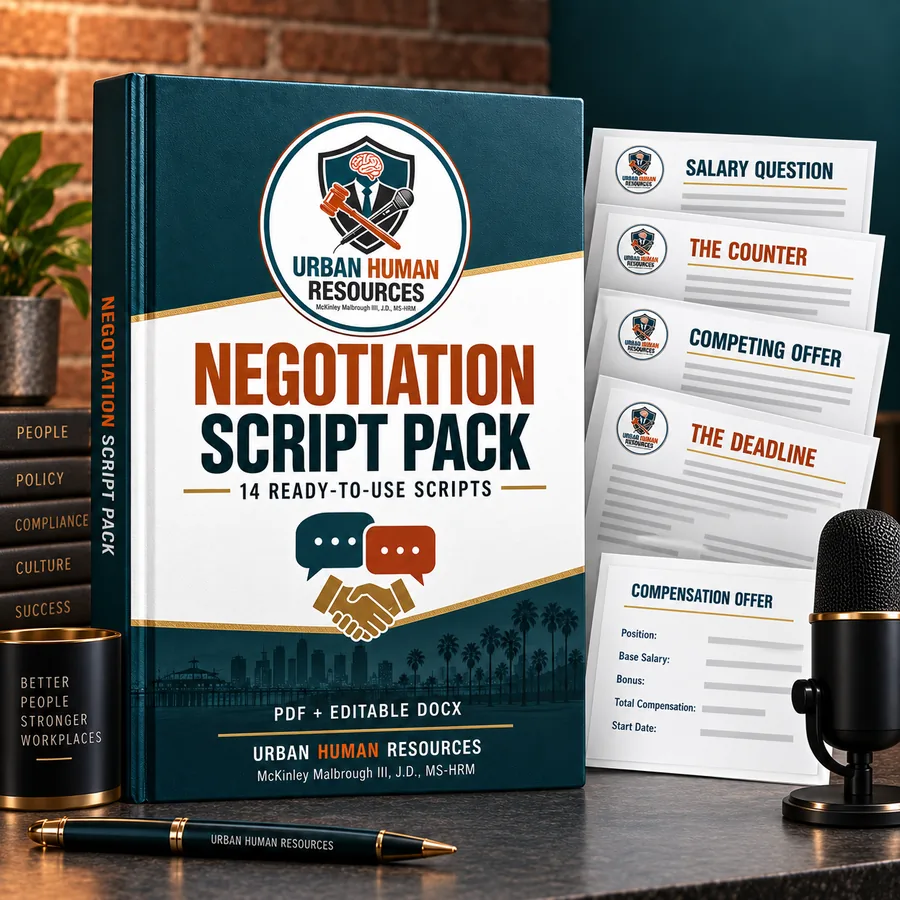
Word-for-word language for the salary question, the counter, the competing offer and the deadline:…
$49 · See it
First-Generation Professionals
By McKinley Malbrough III, J.D., MS-HRM
Published September 22, 2026. Last updated September 25, 2026.
Short answer
Negotiate from your real number, not your fear. Build your target from what the role pays in the market, then set a floor that covers your own costs plus what you send home. Ask once, in writing, with a sourced range. A reasonable counter rarely costs an offer, and the raise compounds for everyone who depends on you.
When your paycheck covers a parent’s rent, a sibling’s tuition or a grandparent’s medicine, a job offer is not only yours. Losing it feels like letting everyone down, so the instinct is to take the first number and say thank you.
That instinct protects against a rare outcome and guarantees a common one. Employers seldom pull an offer over a polite, sourced counter. They routinely pay less to people who do not ask. And the people depending on you feel that gap every month, for years. A $10,000 gap at the start grows to about $269,000 over a career.
Your needs do not set the market rate, and the employer will not pay more because you support family. Start with the job: the posted range, which California employers with 15 or more employees must include (Labor Code 432.3), plus current postings for the same role and level in your area. State wage data for your region, from the Employment Development Department, gives you a third check. That gives you the target number.
Write down what you need each month: your own housing, transportation, food, debt payments and savings, plus what you send home. Multiply by twelve and add taxes. That is your walk-away number. Most people who support family have never written it down, which is why they accept offers below it.
If the floor is above the posted range, the problem is the role or the market, not your negotiation. Better to learn that before you sign.
Do not explain your family situation as the reason for the number. It is true and it matters, but it moves the conversation from the value of the work to your personal budget, and that is a conversation you do not win. The script for the salary question works here too.
Supporting family often means your own savings come last. When you compare offers, look at the 401(k) match and when it vests, health premiums and the deductible. A match you capture is money for your future that the employer pays. Here is how to compare the full package.
A no on base is not a no on everything. Ask what the review timeline is and what result would earn an increase, and get that in writing. Then decide against your floor, not against your fear. If the offer clears your walk-away number and the role moves your career forward, take it and start the clock on the next raise.
The advice you inherited was probably to be grateful and not make waves. It kept earlier generations employed. At your level, it costs the people you are trying to take care of. A plan for your next role and number, in writing, is where the change starts. Here is what a career plan includes.
McKinley holds a J.D. but is not a licensed attorney. Articles here are general information, not legal advice. For your specific situation, talk with an employment attorney.
Data current as of September 2026. Sources are linked where each figure appears.
From the store
Word-for-word language for the salary question, the counter, the competing offer and the deadline:…
$49 · See it
This article is general information, not legal advice. Laws change and every situation is different; for advice on yours, talk with an employment attorney.
Related questions
First-Generation Professionals
September 16, 2026
About $269,000 over twenty years on a $10,000 gap. Every raise is a percentage of your base, so the first number is the one that compounds.
First-Generation Professionals
September 15, 2026
Ask for the pay range first. California law entitles you to it, bars salary history questions, and gives you the strongest opening move in the negotiation.
First-Generation Professionals
April 4, 2026
A career plan before a search names the target role, the pay range, the proof you bring, and the people who can open doors. Here is how to build one.