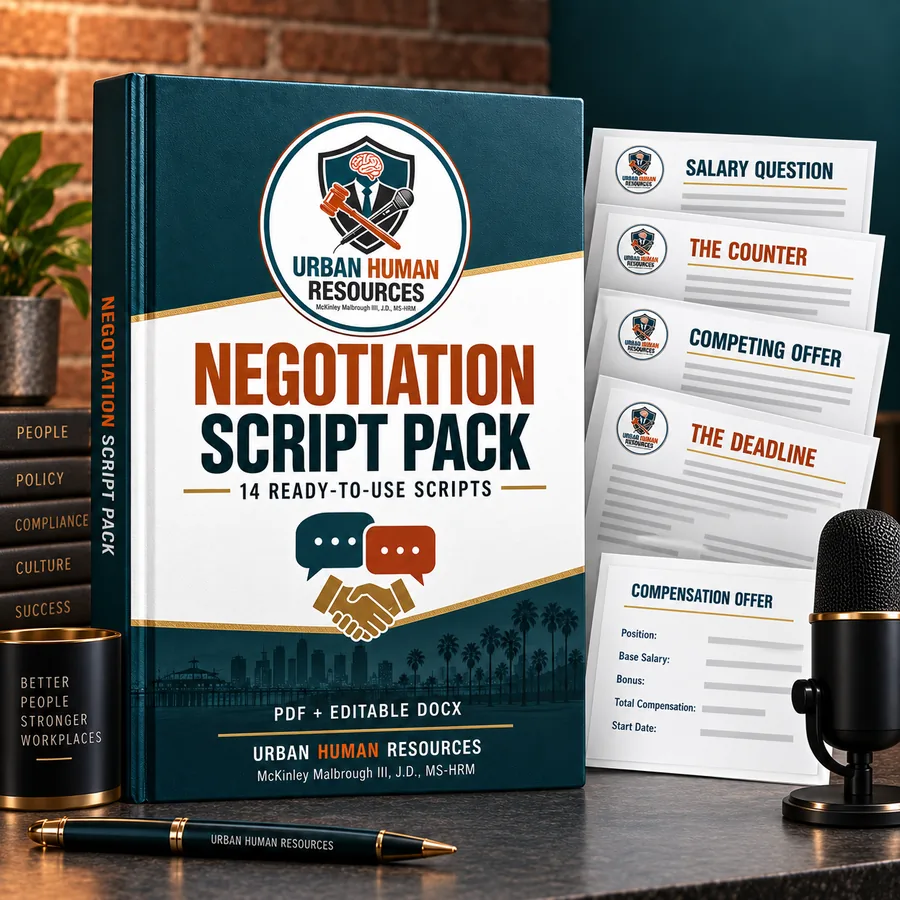
Word-for-word language for the salary question, the counter, the competing offer and the deadline:…
$49 · See it
First-Generation Professionals
By McKinley Malbrough III, J.D., MS-HRM
Published September 22, 2026. Last updated September 26, 2026.

Short answer
Convert each offer into one annual number: base salary, plus the bonus you can realistically expect, plus equity valued conservatively and spread over the vesting period, plus the retirement match you will capture, minus your share of health premiums and likely out-of-pocket costs. Compare those totals, then weigh the parts money does not measure: the manager, the role’s path, stability and commute.
Start with the easy number. Base is guaranteed, it sets future raises, and it anchors your next negotiation. A higher base usually beats an equal amount of bonus or equity, because it compounds. Here is how that compounding works.
An offer that says “target bonus 15%” is not saying you get 15%. Ask what the plan paid out in each of the last two or three years, and whether it depends on company results, team results or your own. Use the historical payout, not the target, in your math. If the company will not say, count half the target.
For private company equity, a conservative approach is to value it at a fraction of paper value, or at zero, and treat anything it pays as upside. Many early-stage options never pay out.
| Component | Offer A | Offer B |
|---|---|---|
| Base salary | $150,000 | $165,000 |
| Expected bonus | $15,000 | $0 |
| Equity per year | $20,000 (public RSUs) | $10,000 (private, discounted) |
| Retirement match | $6,000 | $3,300 |
| Health premiums | minus $2,400 | minus $6,000 |
| Annual total | $188,600 | $172,300 |
The higher base loses by about $16,000 a year once everything is counted. That is the point of the table: the headline number and the real number often point in different directions. Run your own two offers through the offer comparison calculator to see the 10-year difference.
A competing offer is the strongest leverage you will have. Tell the preferred employer, in writing, that you have another offer and what it would take to accept theirs. Ask for the gap in the component they can move most easily, often a sign-on bonus or equity. If family depends on your income, here is how to set your floor first, and here is how California’s pay range rules help.
McKinley holds a J.D. but is not a licensed attorney. Articles here are general information, not legal advice. For your specific situation, talk with an employment attorney.
Data current as of September 2026. Sources are linked where each figure appears.
From the store
Word-for-word language for the salary question, the counter, the competing offer and the deadline:…
$49 · See it
This article is general information, not legal advice. Laws change and every situation is different; for advice on yours, talk with an employment attorney.
Related questions
First-Generation Professionals
September 16, 2026
About $269,000 over twenty years on a $10,000 gap. Every raise is a percentage of your base, so the first number is the one that compounds.
First-Generation Professionals
September 22, 2026
When family depends on your paycheck, negotiating feels riskier. It is the opposite. Here is how to set the number, protect the offer and ask anyway.
First-Generation Professionals
September 15, 2026
Ask for the pay range first. California law entitles you to it, bars salary history questions, and gives you the strongest opening move in the negotiation.