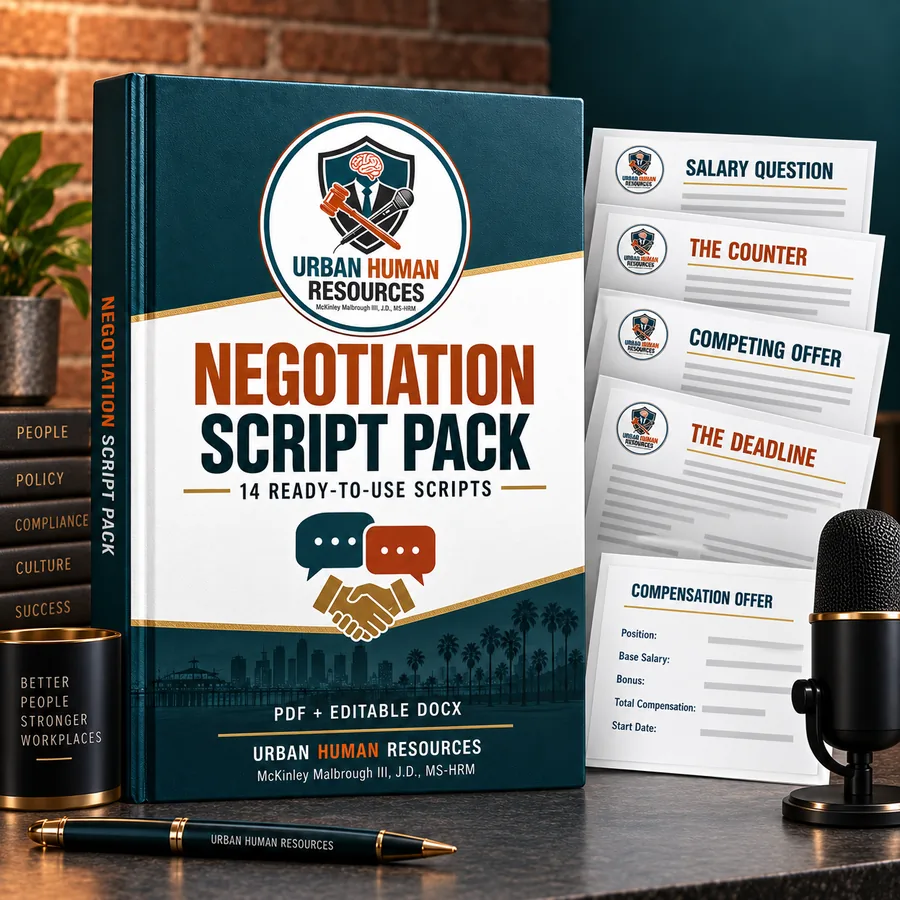
Word-for-word language for the salary question, the counter, the competing offer and the deadline:…
$49 · See it
First-Generation Professionals
By McKinley Malbrough III, J.D., MS-HRM
Published April 4, 2026. Last updated September 25, 2026.

Short answer
A career plan should name four things before you apply anywhere: the exact role and level you want next, the pay range for that role in your market, the three results that prove you can do it, and the people who can put your name in the room. If any of the four is missing, the search runs on hope.
This is the hub for career planning on Insights. Each section below links to a deeper answer. Start here, then follow the one that matches where you are stuck.
“Something in operations” is not a target. “Senior HR business partner at a 200 to 1,000 person Bay Area company” is. A named target role tells you which postings to read, which people to meet, and which pay data applies. It also tells you what to say no to.
Pull ten live postings for the role. Circle the requirements that repeat. Those repeated lines are the job, and they become the language of your resume and your stories.
California employers with 15 or more employees must post a pay scale, and since January 2026 that scale must be a good-faith estimate of what they expect to pay. Ten postings give you ten ranges. Add public data such as the Bureau of Labor Statistics wage estimates for your metro area, and you have a range you can defend. The salary expectations answer shows how to use it in the first recruiter call.
Set three numbers before you apply: your target, your range ask, and your walk-away. Write them down. People who decide their number during the offer call tend to decide it low, and that first number compounds for the rest of a career.
Hiring managers remember results, not responsibilities. For each result, write what the problem was, what you did, and what changed, with a number attached. Reduced time to hire from 52 days to 31. Cut overtime spend 18%. Closed 40 employee relations cases with no agency charges. If you cannot find a number, find the before and after.
These three results do triple duty. They go at the top of your resume, they become your interview stories, and they are the evidence you point to when you ask for more money.
Most searches stall here. List the companies on your target list and, for each one, the person who could refer you or the person who knows that person. A 2022 study in Science that followed millions of LinkedIn users found that moderately weak ties, not close friends, did the most for job mobility. That is good news if you are the first in your circle at this level. Here is how to build that list from zero.
Separate mentors from sponsors while you are at it. A mentor gives you advice. A sponsor spends their reputation on you when you are not in the room. You need both, and they are found in different ways.
Then apply. Applications sent with a target, a number, proof and a name behind them get read differently from applications sent into the portal alone.
If nobody in your family has held a role like the one you want, nobody handed you the unwritten parts: the numbers, the norms, the people. A written career blueprint replaces the playbook you were not given. It also makes the search measurable, so a slow month tells you which of the four parts to fix instead of making you question whether you belong.
McKinley holds a J.D. but is not a licensed attorney. Articles here are general information, not legal advice. For your specific situation, talk with an employment attorney.
Data current as of September 2026. Sources are linked where each figure appears.
From the store
Word-for-word language for the salary question, the counter, the competing offer and the deadline:…
$49 · See it
This article is general information, not legal advice. Laws change and every situation is different; for advice on yours, talk with an employment attorney.
Related questions
First-Generation Professionals
April 4, 2026
Start with second-degree connections, ask one specific question, and follow up with what you did. Here is the message, the list, and the math.
First-Generation Professionals
April 4, 2026
A mentor advises you. A sponsor puts their name behind yours when decisions are made. You need both, and you find them in different ways.
First-Generation Professionals
September 15, 2026
Ask for the pay range first. California law entitles you to it, bars salary history questions, and gives you the strongest opening move in the negotiation.