For urban organizations · How it works
Scoped, built,
rolled out, reviewed
Every company engagement runs the same six stages, whether it is one service or the whole function. Nothing is built before the documents are read, and nothing is delivered without the training to make it stick.
Looking for your own next role? See how an individual engagement works →

How does an HR engagement work?
Six stages. A scoping call to define the problem, a document and data review, a findings report with a risk register, the build of whatever is missing, rollout and training for managers, then a 30/60/90 review to confirm it held. Scope sets the timeline, and the risk register always comes before any build.
Stage 01 · Day 0
Scoping call
Twenty minutes, free. You describe the problem in a sentence, a pay equity worry, a handbook three years old, a termination that has to go right, and I tell you what it actually touches, what it will cost, and how long it takes. Scope and price are agreed before any work begins.
Stage 02 · Week 1
Document & data review
I read what already exists before recommending anything: handbook and policies, job descriptions and levelling, pay and bonus data, personnel files, job postings, prior complaints. Most engagements find the answer partly sitting in documents nobody has re-read in years.
Stage 03 · Week 2
Findings & risk register
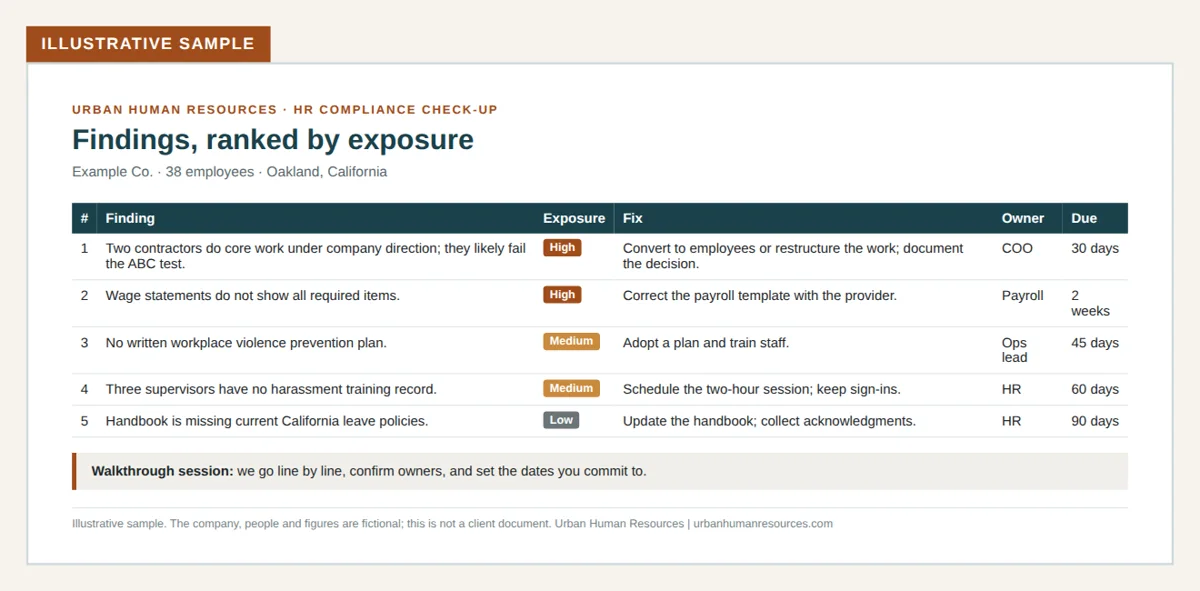
A written findings memo, with every issue ranked by legal and financial exposure rather than by how easy it is to fix. This is where the law degree earns its place: you get the risk stated plainly, with the reasoning, so leadership can decide what to fund.

Stage 04 · Weeks 2–6
The build
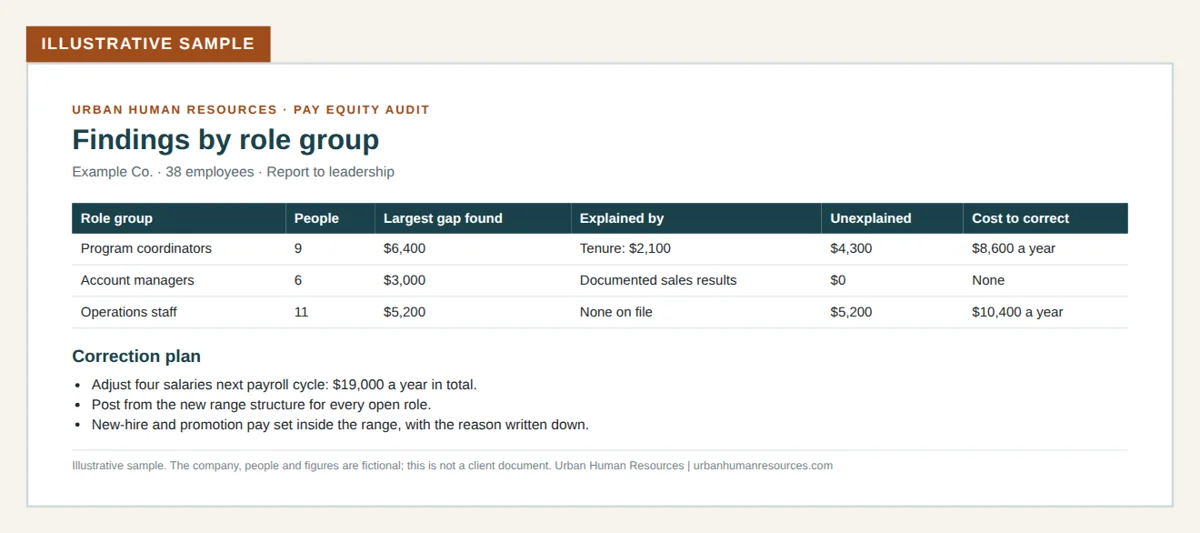
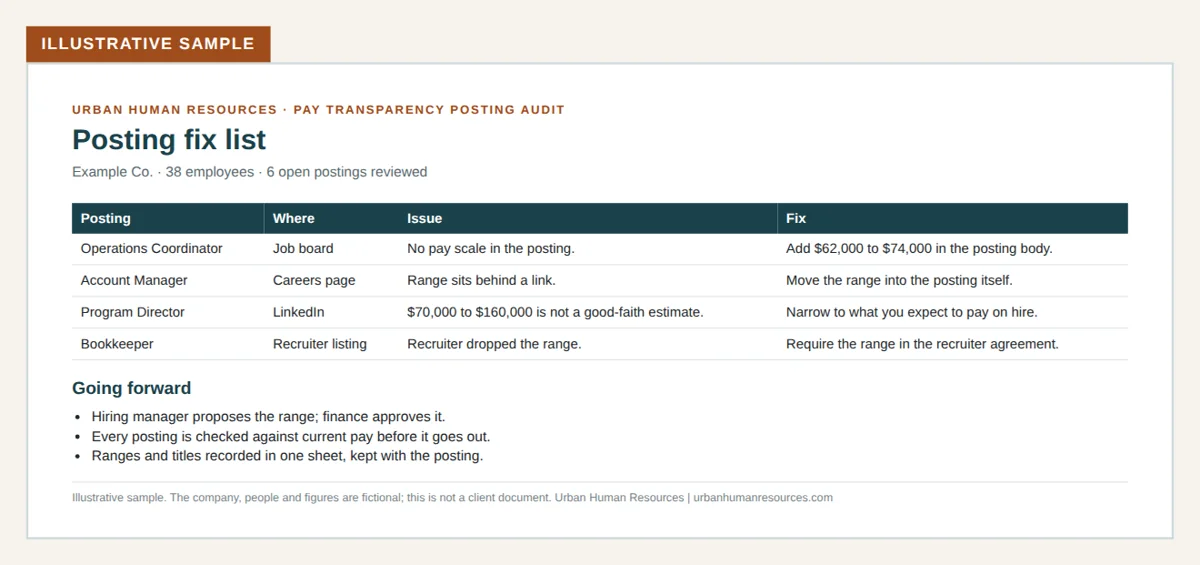
The deliverable itself: the rewritten handbook, the salary bands and classification decisions, the audit and its remediation plan, the onboarding or manager training program, or the termination plan. Fixed scope, fixed fee, written to survive a regulator or a plaintiff's attorney reading it later.
Stage 05 · Rollout
Rollout & training
A document nobody was trained on changes nothing. I brief the managers who have to apply it, prepare the employee communication, and deliver the training: designed rather than improvised, which is what the instructional-design specialization is for.
Stage 06 · 30/60/90
Review
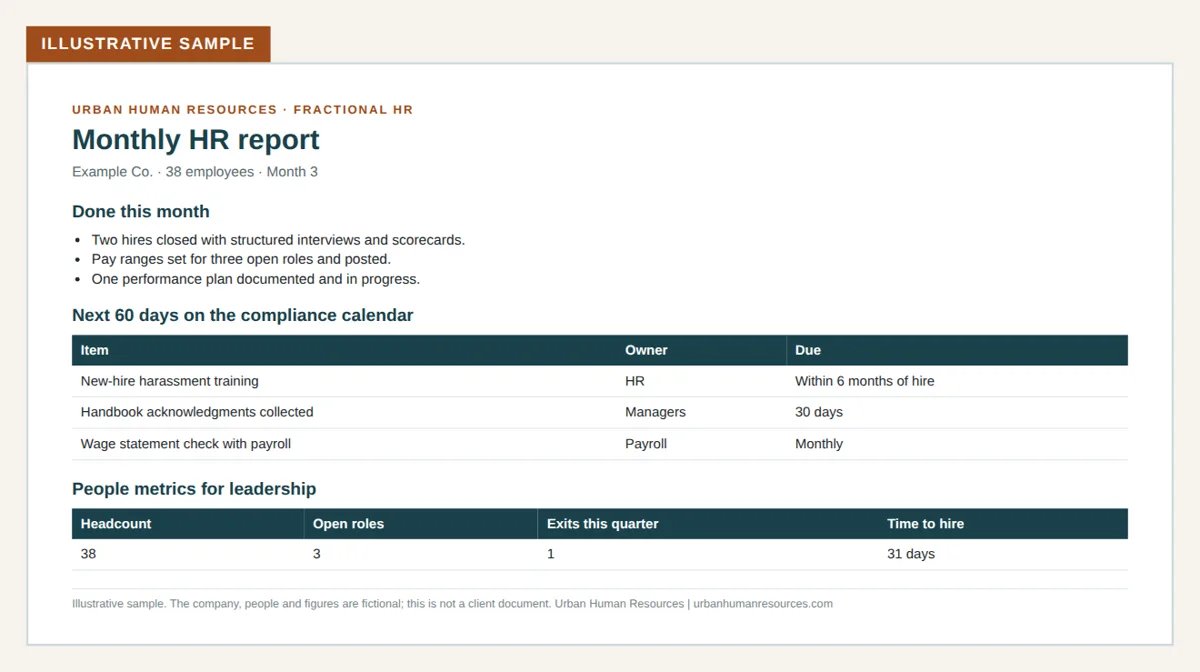
A check at thirty, sixty and ninety days to see whether the change held, with a named escalation path in the meantime. If something surfaced that was outside scope, you get it in writing rather than as a surprise invoice.
The outcome
What changes for your company
Here is where your company stands when the work is done, what I need from your team, and what you receive.
When we're done
- You know which California rules apply at your headcount, and where you stand on each one.
- Every gap has a fix, an owner and a date, with penalty and back-pay items first.
- Your documents hold up when a wage claim, an agency letter or a buyer's diligence request arrives.
- Your managers know what to do the day a hard conversation or a complaint lands on them.
What I need from you
- One point person who can pull documents and make decisions.
- The documents on a short list. Most companies pull them in a day.
- Decisions on owners and dates at the findings session. I do the heavy lifting; you approve what changes.
See the work