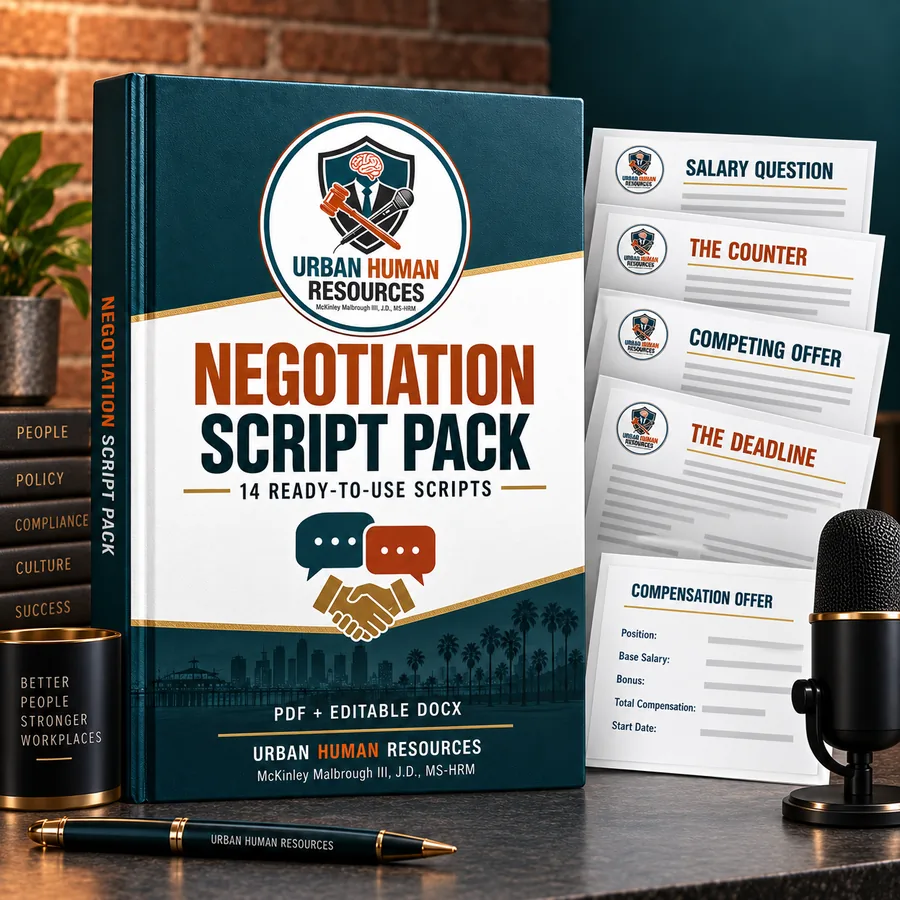
Word-for-word language for the salary question, the counter, the competing offer and the deadline:…
$49 · See it
First-Generation Professionals
By McKinley Malbrough III, J.D., MS-HRM
Published September 16, 2026. Last updated September 25, 2026.

Short answer
About $269,000 over twenty years, on a $10,000 gap. Every raise is a percentage of your base, so the first number you accept is the one that compounds. Negotiating the starting salary is the highest-return conversation of your career.
This is the hub for every negotiation question on Insights. Start here, then follow the links to the specific situation you are in.
Take two people offered the same job. One accepts. The other negotiates $10,000 more. Both get 3% raises every year for twenty years. The gap in year one is $10,000. By year twenty it is more than $17,500 a year, and the total difference across the twenty years is about $269,000. That is before counting retirement matches and bonuses calculated as a percentage of base, which widen it further.
| Year | Accepted first offer | Negotiated +$10,000 | Gap that year |
|---|---|---|---|
| 1 | $120,000 | $130,000 | $10,000 |
| 10 | $156,573 | $169,621 | $13,048 |
| 20 | $210,421 | $227,956 | $17,535 |
Every future raise, promotion increase and retention offer is calculated from the base you carry in. The gap never closes on its own. It only grows.
The same math runs in reverse on the employer’s side. A company that saves $10,000 on your start pays for it later in turnover, because the fastest way to fix a low base is usually to leave. The negotiation is not you taking something from them. It is setting a number that both of you can live with for years.
Rescinded offers after a polite, sourced counter are rare. What happens far more often is a “we’re at the top of the band” reply, which tells you where the ceiling is and costs you nothing. The real risk is tone, not the ask: an ultimatum, a vague number, or a counter made on a phone call with no written follow-up. Handle those three and the downside of asking is close to zero.
A 2025 Resume Genius survey found that 55% of workers accepted their first offer without negotiating, and 78% of those who negotiated got a better offer. Most employers build room for a counter into the first number. Not asking leaves that room with them.
In the Bay Area, the Bay Area Council has reported a gap of about $30,000 in pay between Black workers and white workers. Part of a gap like that is built one first offer at a time.
Most people who accept on the spot are not uninformed. They are protecting something: a relationship with the hiring manager, a family that needs the start date, or an offer that took months to land. Those are real stakes, and they are why the advice has to be a plan, not a slogan. If your paycheck supports more people than you, negotiating with a family depending on you takes a different sequence, not a smaller ask.
The standard advice is “always negotiate,” and it assumes pushing back is free. For an urban professional, the same words can be read differently. Peer-reviewed research has found that evaluators with higher racial bias resisted concessions to Black candidates who negotiated. Here is what that research found and how to negotiate anyway.
The plan has to raise the number and protect how the ask is received: get the request in writing, frame it with data, and send a recap email afterward. When you have two offers on the table, compare them on total value, not base alone, before you use one against the other.
McKinley holds a J.D. but is not a licensed attorney. Articles here are general information, not legal advice. For your specific situation, talk with an employment attorney.
Data current as of September 2026. Sources are linked where each figure appears.
From the store
Word-for-word language for the salary question, the counter, the competing offer and the deadline:…
$49 · See it
This article is general information, not legal advice. Laws change and every situation is different; for advice on yours, talk with an employment attorney.
Related questions
First-Generation Professionals
September 15, 2026
Ask for the pay range first. California law entitles you to it, bars salary history questions, and gives you the strongest opening move in the negotiation.
First-Generation Professionals
September 22, 2026
Research shows biased evaluators penalize Black candidates who negotiate. The answer is to negotiate with data, fewer rounds and everything in writing.
First-Generation Professionals
September 22, 2026
When family depends on your paycheck, negotiating feels riskier. It is the opposite. Here is how to set the number, protect the offer and ask anyway.