Skip to content

Urban Human Resources


"Nobody was ever going to tell you how it works, so I did; now pass it on."

The rules
that decide
the outcome,
in your hands

If you are negotiating an offer, planning your next move, or trying to run your company's people the right way, the rules that decide the outcome usually stay inside HR. My job is to put them in your hands. I learned those rules the long way, from East Oakland to a law degree, a master's in human resources, and 12+ years inside HR. Now I use all of it for you: the professional deciding what to ask for, and the company deciding how to treat its people.

Urban Human Resources is an Oakland HR consulting firm built for two clients: first-generation and underrepresented professionals in the Bay Area negotiating for the roles they earned, and Bay Area startups and minority-owned businesses of 10 to 150 employees, at the point where HR outgrows the owner's desk.

Urban Human Resources was founded in 2017 on a simple observation: the people who decide what a role is worth, how it is levelled, and which resume gets a second look all work in HR, and almost nobody outside HR is told how any of it works.

I built this practice to put that knowledge on the candidate's side of the table, and to put the same knowledge to work inside companies building the function properly. The work is process, structure, and preparation.

I hold a Juris Doctor from the University of San Francisco School of Law, so employment risk gets read from the statute up. I hold a Master of Science in Human Resources Management from Colorado State University Global, with a specialization in Online Learning Innovation and Design, the same training that shapes how I build onboarding systems and manager development programs that people actually complete. I also hold a Bachelor of Arts in Communication Studies with a Mass Media emphasis from Bellevue University, which shows up in how I write policy: clearly, for the person who has to follow it, not just the person who wrote it.

Negotiation is a core skill in this practice. Offers are rarely just salary: base, bonus, incentives and equity get read against the market and negotiated with a disciplined walk-away. The same skill runs an executive offer, a retention conversation, and a difficult employee relations meeting.

I use AI as a force multiplier for research, drafting, and operations, under strict confidentiality. The judgment, the advice, and the final work are mine.
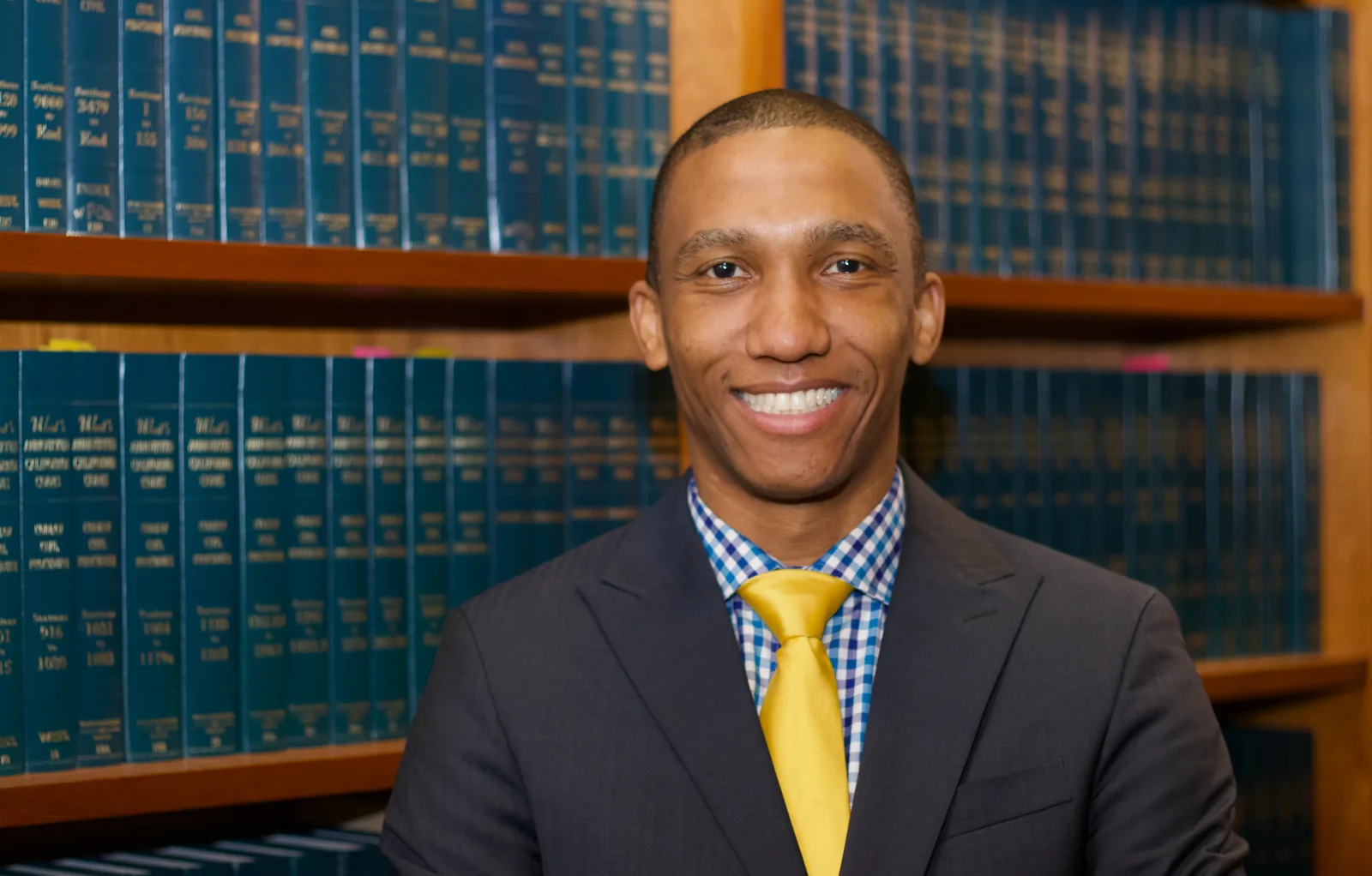

McKinley Malbrough III, founder and principal consultant of Urban Human Resources

Founder: McKinley Malbrough III


Founder: McKinley Malbrough III

Principal Consultant · J.D., MS-HRM

J.D., MS-HRM. 12+ years in human resources, running this practice since 2017, with 60+ clients: employee relations, compliance, compensation and workforce training.

Credentials


HR practice

Since 2017, building HR infrastructure, policy, and compliance systems for organizations from early-stage startups to established companies. Founder and principal consultant at Urban Human Resources since 2017, serving clients across technology, financial services, healthcare and professional services, following years in an in-house HR business partner role covering employee relations, multi-state compliance and performance management.

Education

  • Juris Doctor (J.D.), University of San Francisco School of Law
  • Master of Science, Human Resources Management (MS-HRM), Colorado State University Global, Specialization in Online Learning Innovation and Design
  • Bachelor of Arts, Communication Studies, Mass Media Emphasis, Bellevue University

Where I work

An HR consulting firm and career coach based in Oakland, California, serving the greater Bay Area in person and clients across California remotely. Deep working fluency in California-specific employment law, including pay transparency requirements, worker classification (AB5/ABC Test), and meal-and-rest-break compliance, in addition to multi-state HR practice.

Client outcomes


Client outcomes Since 2017
No.MeasureResultNote
01Median time to first interview3 weeksFrom kickoff session
02Median time to offer11 weeksFrom kickoff session
03Clients served60+Since 2017
04Would recommend90%+Post-engagement survey

Case study


Eleven applications, zero replies, then a same-day offer response

High-Velocity Campaign · HR Manager, Mid-Market Technology

By , J.D., MS-HRM · Published

Situation

Strong resume, nine years of relevant experience, eleven applications sent directly to company career pages over six weeks with zero responses. No sense of what was actually wrong with the materials or the approach.

What I did

Rebuilt the resume around achievement metrics instead of duty descriptions, restructured the LinkedIn profile to match recruiter search behavior, and built a named list of 24 target companies with the specific person to contact at each. Ran four weekly strategy sessions reviewing what generated replies and adjusting the outreach language in real time.

Result

First recruiter response within nine days of the new materials going live. Two first-round interviews within three weeks. Offer received and negotiated up on base salary and start date within eight weeks of the initial kickoff session.

On stage


AI-altered image: McKinley Malbrough III delivering a keynote
AI-altered image

Speaking and training

Keynotes, manager training and compliance sessions for conferences, companies and professional associations. The microphone on the crest is not decorative: delivery is part of the practice, from a communication studies degree through twenty years of facilitation design.

Inquire about a speaking date →

Mission statement & values


Mission

I help urban professionals get paid what their work is worth, and urban organizations hire right, pay fairly and keep the people they can't afford to lose. The knowledge that usually stays inside HR goes to both sides of the table.

Value 01

Say the hard thing

If the gap is experience rather than the resume, or the exposure is worse than leadership thinks, you hear it in the first meeting. Clients pay for accuracy, not reassurance.

Value 02

Scope before work

Fixed scope, fixed price, written down before anything starts. No hourly surprises, and anything outside scope comes to you in writing rather than on an invoice.

Value 03

Both sides, no double-dealing

Working with companies and individuals works because every engagement runs under its own confidentiality terms.

Value 04

Teach it, don't hoard it

The guides, templates and training exist so the knowledge outlasts the engagement. A client who no longer needs me is the point, not a lost account.

Who I serve


Three terms, defined

"Urban" doesn't describe a ZIP code. It describes the people the system reads last. The full vocabulary lives in the Urban Glossary.

Urban professional
A first-generation or underrepresented professional who earned their seat on merit and is negotiating for what that seat is worth, without an inherited playbook. Three to fifteen years in, holding or moving into senior roles, across tech, healthcare, finance, biotech, the public sector, and nonprofits.
Why: urban professionals carry more to the same table than suburban professionals, and the standard advice was never written for that load.
Urban organization
Any employer built by or for the people the system reads last, growing on its own revenue and hiring from its own network: startups, minority-owned businesses, and nonprofits of 10 to 150 people, in any legal structure.
Why: HR consulting is built to serve the company. Urban organizations needed a term for the ones it forgot.
Urban corporation
An urban organization that is legally incorporated, a C corporation or S corporation of 10 to 150 people, answering to a board or shareholders.
Why: incorporation changes the advice. Equity, governance, and investor due diligence require a different playbook.

What makes this practice different


The system wasn't built for you. I know exactly where it breaks.

I came up where the standard HR advice breaks, so I build for the people it skips. Fewer than 2 in 100 California HR professionals hold a professional degree. Source: U.S. Census Bureau, American Community Survey 2023, California microdata. Data current as of September 2026.

The record behind it: 8% voluntary turnover at a client I supported, against a 15.6% tech-industry benchmark; a three-year union agreement closed with zero hours of work stoppage; and 88 live job postings audited for California pay transparency.

01 · The law degree

The J.D. at work

It underwrites the higher-risk work: classification audits, pay equity exposure, employee and labor relations, M&A diligence.

02 · Both sides of the table

Serving companies and individuals

Knowing how a company builds an offer is what makes my career coaching in Oakland and across the Bay Area work, and knowing what candidates weigh is what makes the retention plan work.

03 · Instructional design

Training built in-house, not outsourced

Onboarding and compliance training design is normally handed to specialist L&D firms. A formal instructional-design specialization means I build those programs myself: and they get finished, not just assigned.

04 · Negotiation

Negotiation as a core skill

Offers are packages: base, bonus, incentives and equity, negotiated on market comparables with a disciplined walk-away. The same toolkit runs a salary negotiation, an executive offer, and a retention plan for the people a company cannot afford to lose.

Two things I am deliberate about. Urban Human Resources is an Oakland HR consulting practice, not a law firm: the law degree is used for risk identification and strategy, never as legal advice or representation.

Published work


Delivering a training session to a room of employees

Primary research

FLSA classification report

An original research report on exempt and non-exempt classification, produced for a national employment law firm's marketing arm and built on a survey of 22 verified HR and business leaders.

Its central finding was a confidence trap: companies rate their own classification accuracy far higher than their practices support.

Thought leadership

Original published articles

Published across labor economics, leadership and public policy: ongoing engagement with the subject matter rather than a portfolio of client deliverables alone.

Since 2006

Twenty years in virtual training design

Founded Online Facilitation Skills in 2006, backed by an MS-HRM specialization in online learning design: the foundation under my onboarding programs, Manager 101 training and executive coaching.

Read the guides drawn from this work →

The personal side of the story is off the record →

Twenty minutes, no cost