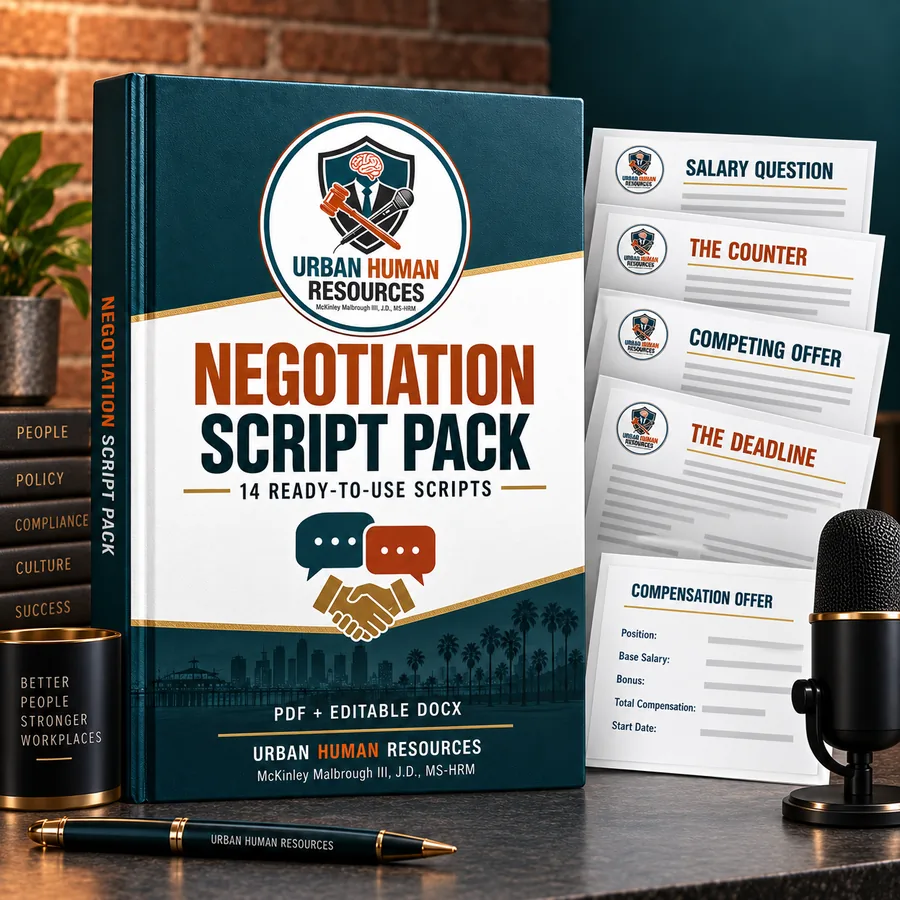
Word-for-word language for the salary question, the counter, the competing offer and the deadline:…
$49 · See it
First-Generation Professionals
By McKinley Malbrough III, J.D., MS-HRM
Published April 4, 2026. Last updated September 25, 2026.
Short answer
Map 15 target companies, find one second-degree connection or alumni match at each, and send a short message asking one specific question about the team or role. Follow up with what you did with the answer. Referrals come from the second or third conversation, not the first message.
A 2022 study in Science ran randomized experiments on LinkedIn’s “People You May Know” feature across millions of users over five years. Moderately weak ties, people you share some connections with but do not know well, did more for job mobility than close friends did. You do not need an inner circle at the company. You need an acquaintance of an acquaintance.
That matters if you are the first in your family at this level. Your strong ties may not work where you want to go. Your weak ties can be built on purpose.
It confirmed at scale what the sociologist Mark Granovetter argued in “The Strength of Weak Ties” in 1973: new openings tend to arrive through people you know a little, not through your closest circle.
Take the target role from your career plan and list 15 companies that hire for it. For each one, search LinkedIn for people in or near that team, then filter three ways:
Pick one person per company. You now have 15 names, which is enough.
Generic asks get ignored. Specific ones get answered. Try this:
“Hi Dana, I saw you’ve been on the people operations team at Northwind for two years. I’m an HR generalist in Oakland looking at their HRBP openings. What does the team value most in the first six months? Happy to keep it to 15 minutes, or a two-line reply is great.”
The message works because it shows you did homework, it asks something only an insider can answer, and it gives them an easy way to say yes. Do not ask for a referral in the first message. Do not attach a resume.
After the call, send a thank-you within a day. Two to three weeks later, send a short note: “You mentioned the team is rebuilding onboarding. I reworked mine around that and applied Tuesday.” That follow-up is where a contact becomes a referral. People refer people they have watched act on their advice.
Plan for most cold messages to go unanswered. If one in three gets a reply, fifteen messages produce four or five conversations. Four or five conversations usually produce one or two people willing to pass your name along. Send five a week and you will have referrals in motion within a month.
Many employers fill a large share of roles through employee referrals. If your network does not reach inside, your application goes through the portal, where screening tools compare you to averages that may not fit you. That is the anomaly trap, and a referral is the most reliable way around it. Networking is not a personality trait. It is a process, and the process can be learned.
The best contacts eventually become mentors, and a few become sponsors. Here is the difference and why it matters.
McKinley holds a J.D. but is not a licensed attorney. Articles here are general information, not legal advice. For your specific situation, talk with an employment attorney.
Data current as of September 2026. Sources are linked where each figure appears.
From the store
Word-for-word language for the salary question, the counter, the competing offer and the deadline:…
$49 · See it
This article is general information, not legal advice. Laws change and every situation is different; for advice on yours, talk with an employment attorney.
Related questions
First-Generation Professionals
April 4, 2026
A career plan before a search names the target role, the pay range, the proof you bring, and the people who can open doors. Here is how to build one.
First-Generation Professionals
April 4, 2026
A mentor advises you. A sponsor puts their name behind yours when decisions are made. You need both, and you find them in different ways.
First-Generation Professionals
September 19, 2026
A system built on averages treats someone who beat those averages as an error. Here is how that shows up in AI and hiring, and how to get past it.