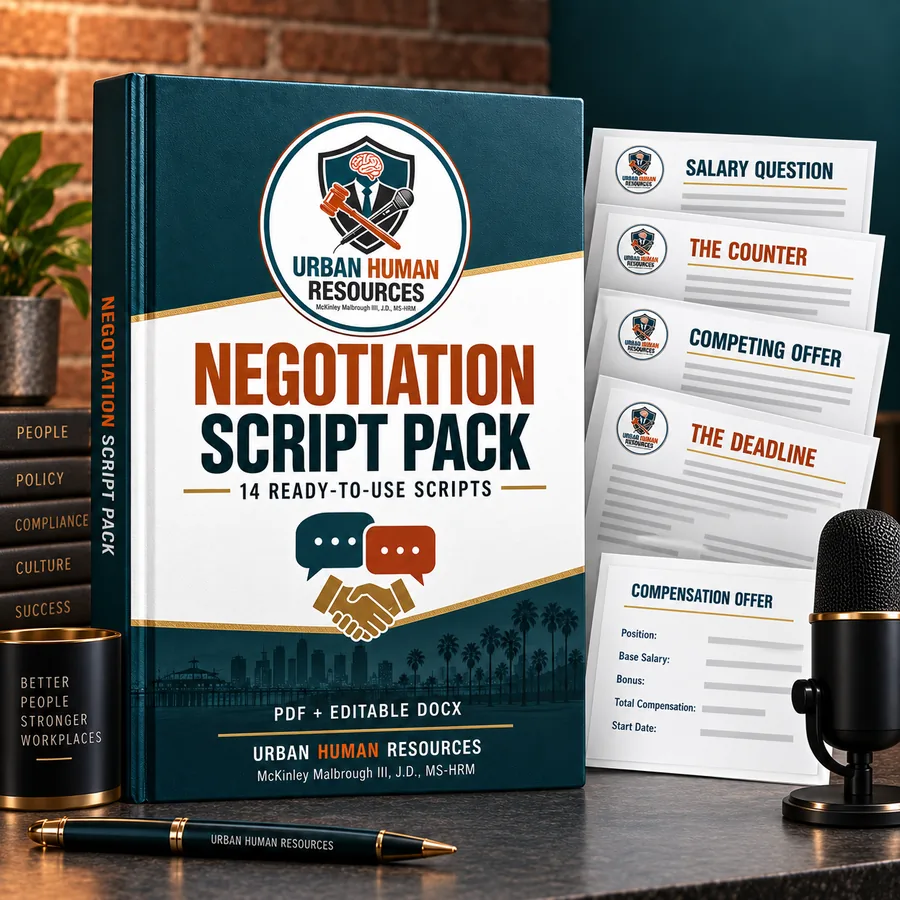
Word-for-word language for the salary question, the counter, the competing offer and the deadline:…
$49 · See it
First-Generation Professionals
By McKinley Malbrough III, J.D., MS-HRM
Published April 4, 2026. Last updated September 25, 2026.
Short answer
Code-switching is adjusting your speech, appearance, behavior and expression to fit the dominant norms at work. Research in Harvard Business Review found it can raise perceptions of professionalism while taking a real toll on energy and well-being. The goal is to choose when you switch, not to switch by default.
Code-switching at work shows up in small decisions made many times a day: flattening an accent on a client call, changing a hairstyle before an interview, not mentioning a weekend at church or a cookout, laughing at a joke that was not funny, rehearsing an email so it does not read as “aggressive.” Each choice is small. Together they are work.
A 2019 Harvard Business Review article by McCluney, Robotham, Lee, Smith and Durkee, “The Costs of Code-Switching,” summarized research on Black employees in particular. People tend to code-switch in settings where they are negatively stereotyped. Doing so can make them seem more professional to others, and it can also be exhausting and feel inauthentic.
Some pressure to switch is not just cultural. It is illegal. California’s CROWN Act (SB 188) added traits historically associated with race, including hair texture and protective hairstyles such as braids, locs and twists, to the definition of race under the Fair Employment and Housing Act. An employer with 5 or more employees cannot require you to change those to get or keep a job. The CROWN Act entry has the details.
The goal is not to never adjust. Everyone adjusts for an audience. The goal is to make it a choice.
If your people feel they have to switch to be taken seriously, your culture is costing you performance. Review what “professional” means in your dress code and your review language. Words like “polish,” “presence” and “fit” should come with specific, observable behaviors, or they should come out of the review. A structured interview with a scorecard reduces the room for style to stand in for skill.
I grew up in East Oakland and built a career in rooms that did not look like my block. The switch got me in some doors. Knowing when to stop switching kept me in them. A good coach can help you sort feedback that makes you better from feedback that asks you to disappear, and so can the anomaly trap lens: the system reads you against an average, and you do not have to become the average to be read correctly.
Start small. This week, pick one meeting where you will not switch and one colleague you will share something real with. Notice what changes in how people respond to you and how much energy you have at the end of the day. That is data you can use to decide where switching is worth its cost.
McKinley holds a J.D. but is not a licensed attorney. Articles here are general information, not legal advice. For your specific situation, talk with an employment attorney.
Data current as of September 2026. Sources are linked where each figure appears.
From the store
Word-for-word language for the salary question, the counter, the competing offer and the deadline:…
$49 · See it
This article is general information, not legal advice. Laws change and every situation is different; for advice on yours, talk with an employment attorney.
Related questions
First-Generation Professionals
September 19, 2026
A system built on averages treats someone who beat those averages as an error. Here is how that shows up in AI and hiring, and how to get past it.
First-Generation Professionals
April 4, 2026
A mentor advises you. A sponsor puts their name behind yours when decisions are made. You need both, and you find them in different ways.
April 4, 2026
Coaching works when the gap is behavior, not knowledge. Research shows real effects on performance and coping. Here is when to hire a coach and what to pay for.