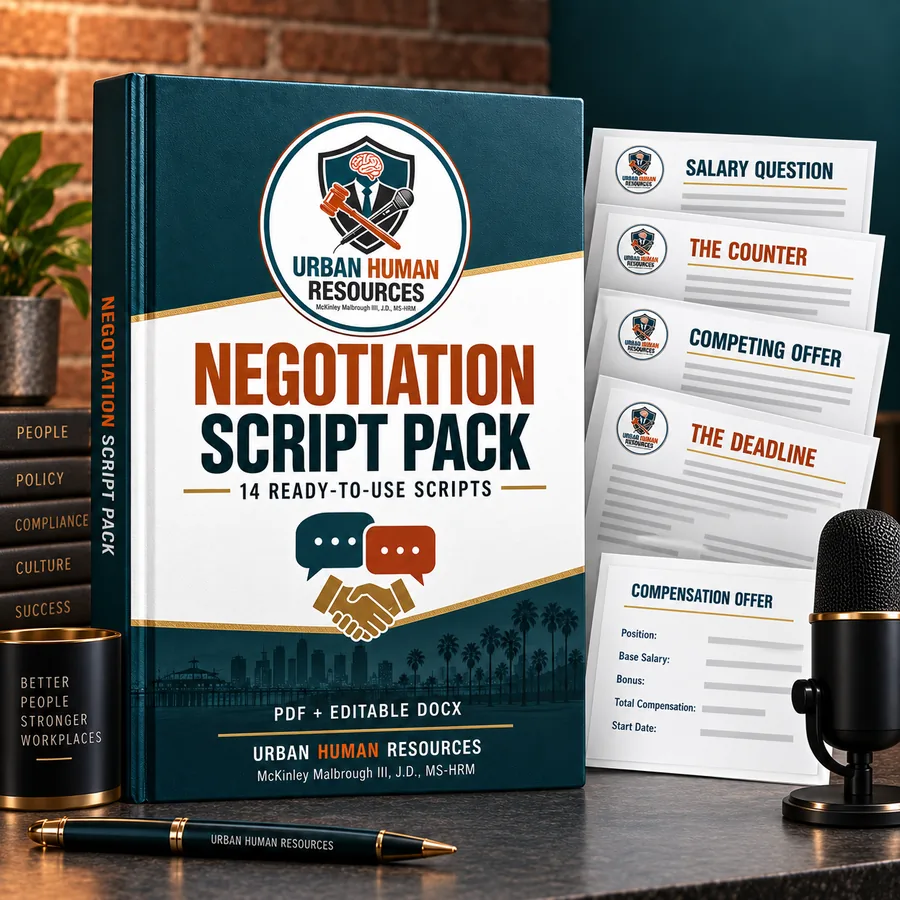
Word-for-word language for the salary question, the counter, the competing offer and the deadline:…
$49 · See it
First-Generation Professionals
By McKinley Malbrough III, J.D., MS-HRM
Published September 22, 2026. Last updated September 25, 2026.
Short answer
No. California Labor Code 232 and the California Equal Pay Act bar employers from prohibiting employees from disclosing their own wages, discussing coworkers’ wages, or asking what coworkers earn, and from retaliating against employees who do. Federal labor law protects most non-supervisory employees the same way. A policy, handbook rule or agreement that says otherwise is not enforceable on this point.
Labor Code 232 says an employer cannot:
The California Equal Pay Act adds the same protection and ties it to equal pay: an employer cannot stop you from discussing wages as a way to find out whether you are paid fairly for substantially similar work. The law does not require anyone to share. It protects the choice to.
Section 7 of the National Labor Relations Act protects most private-sector employees who talk with coworkers about pay and working conditions, whether or not there is a union. The National Labor Relations Board treats rules against pay discussions as unlawful, including informal ones, such as a manager telling the team not to talk about raises.
Keep a copy of the policy, email or message. You can raise it with HR, file a complaint with the California Labor Commissioner, or file a charge with the NLRB. If you were disciplined or fired for discussing pay, talk with an employment attorney about retaliation, and note the dates. This article is general information, not legal advice.
The protection follows California employment, not the office. If you work for a California employer from home, your pay conversations in chat, email or a video call are covered the same way. A rule against discussing pay in Slack is still a rule against discussing pay. Before you negotiate a raise with what you learn, the cost of staying underpaid is worth seeing in dollars.
Knowing what coworkers earn only helps if you use it well.
If people doing substantially similar work are paid differently, and the difference tracks sex, race or ethnicity rather than seniority, merit, production or another legitimate factor, the Equal Pay Act may apply. Research also shows who gets penalized for pushing on pay, which is why how you raise it matters.
Pay conversations are coming either way. The companies that handle them well are the ones whose pay holds up when compared. Here is how to build ranges that do.
McKinley holds a J.D. but is not a licensed attorney. Articles here are general information, not legal advice. For your specific situation, talk with an employment attorney.
Data current as of September 2026. Sources are linked where each figure appears.
From the store
Word-for-word language for the salary question, the counter, the competing offer and the deadline:…
$49 · See it
This article is general information, not legal advice. Laws change and every situation is different; for advice on yours, talk with an employment attorney.
Related questions
First-Generation Professionals
September 15, 2026
Ask for the pay range first. California law entitles you to it, bars salary history questions, and gives you the strongest opening move in the negotiation.
September 22, 2026
Price the job before the person: define the level, pull three market sources, set the midpoint, and check it against the people you already pay.
First-Generation Professionals
September 22, 2026
Research shows biased evaluators penalize Black candidates who negotiate. The answer is to negotiate with data, fewer rounds and everything in writing.