For urban organizations
Pay equity audit for California employers
California’s Equal Pay Act requires equal pay for substantially similar work across sex, race and ethnicity, unless a legitimate factor explains the difference. Since January 2026, SB 642 also gives employees more time to bring those claims. The pay equity audit finds gaps before a claim does, and tells you which ones need fixing.
Who it is for
- Companies whose pay grew by negotiation rather than design.
- Employers about to post ranges for the first time, where a posted range will reveal internal gaps.
- Organizations approaching 100 employees and the state pay data report.
How it works
- Group roles doing substantially similar work, by skill, effort, responsibility and working conditions, not job title alone.
- Compare pay within each group across sex, race and ethnicity.
- Test each gap against the lawful explanations: seniority, merit, production, and bona fide factors such as education, training or experience.
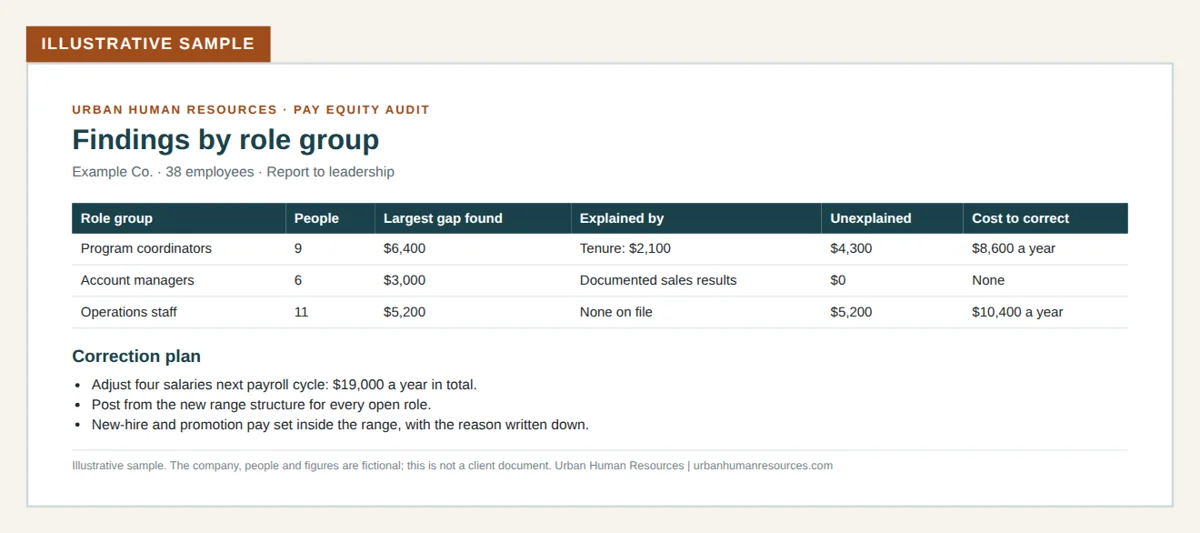
- Separate explained gaps from unexplained ones, and price the fix for each.
What you get
- A written findings report by role group.
- A correction plan with a cost and a timeline.
- A pay range structure you can post from and defend.
- A process for setting new-hire and promotion pay so gaps do not return.
Who sees the findings
You decide. If your employment counsel directs the audit, I work for counsel and the report goes to them, which is how companies typically seek to keep an audit privileged. Without counsel, the report comes to you and is not privileged, so the correction plan gives every gap a fix and a date. Either way, the work happens inside your systems, and I keep no employee data.
When we’re done
- You know which gaps exist, which are explained by lawful factors, and what the rest cost to fix.
- A correction plan with a cost and a timeline you choose.
- A range structure you can post from, and a process that keeps new gaps from forming.
What leaving it costs
- An employee can file up to three years after the last affected paycheck and recover up to six years of the difference (SB 642, in effect January 2026).
- Recovery is the wage difference, plus an equal amount in liquidated damages, plus interest and the employee’s attorney’s fees (Labor Code 1197.5).
- Worked example: a $5,200 unexplained gap left for six years is $31,200 in back pay, doubled to $62,400 by liquidated damages, for one employee, before interest and fees.
Figures come from the statutes cited. What applies to your company depends on your facts.
What I need from you
- A payroll export and job titles, with hire dates and any documented performance or education factors.
- Whether your employment counsel will direct the audit, decided before we start.
- One decision-maker for the correction plan.
Price
Every company engagement is quoted in writing after a free 20-minute consult, so the price matches your headcount and scope. The quote does not change based on who asks.
A posting audit fee paid in the prior 30 days is credited in full toward the pay equity audit.